
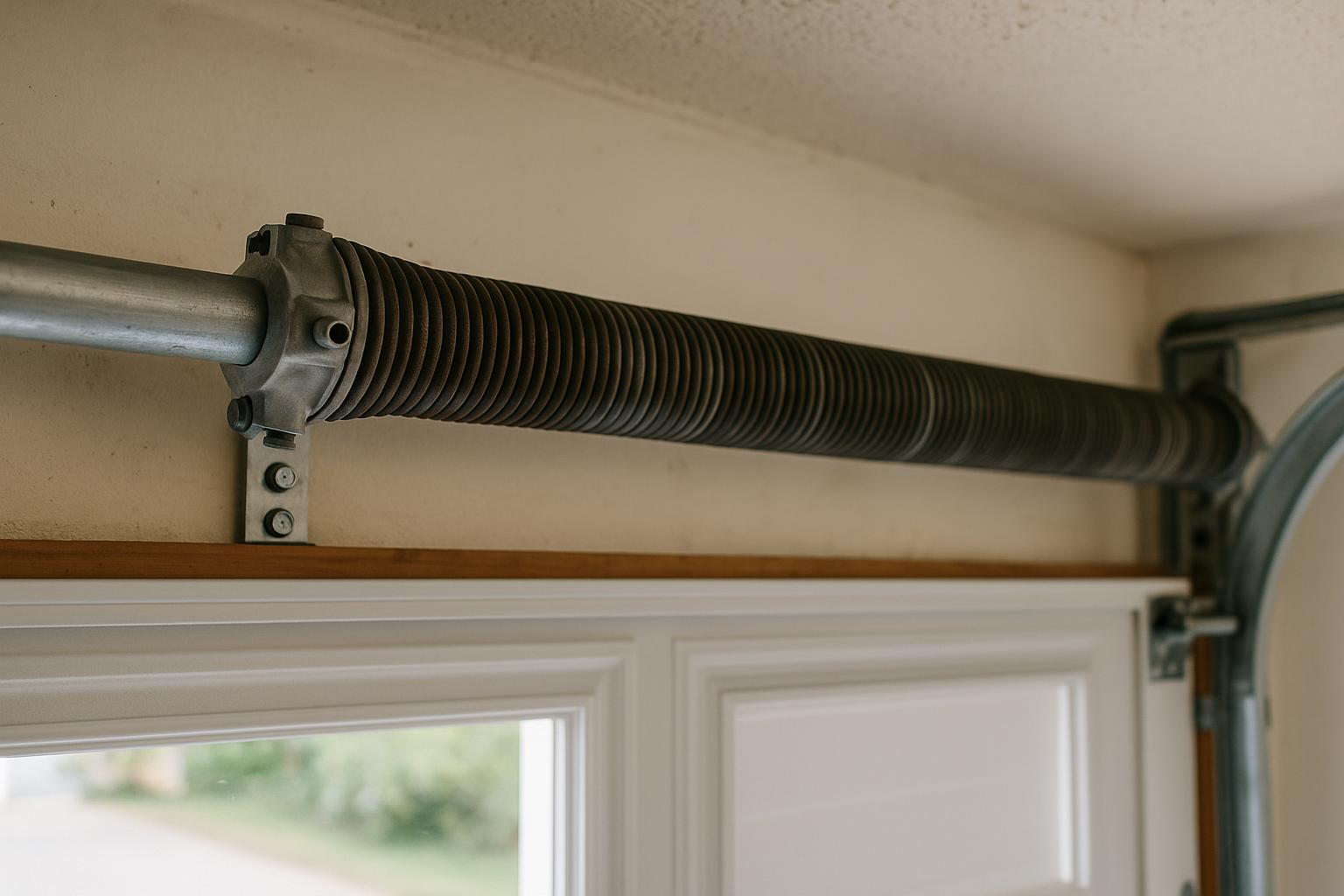
Your Garage Door Springs Are Working Harder Than You Think
Every time you open and close your garage door, your springs are doing the heavy lifting — literally. A standard two-car garage door can weigh between 150 and 250 pounds, and your springs are responsible for counterbalancing all of that weight. Over time, even the best springs wear out, and when they fail, it can be sudden, loud, and potentially dangerous.
For homeowners in Lake Orion, where harsh winters and temperature swings put extra stress on garage door components, understanding when to replace your springs is one of the smartest things you can do to protect your home and your family.
How Long Do Garage Door Springs Last?
The lifespan of a garage door spring is measured in cycles. One cycle equals one full open-and-close of your garage door. Most standard torsion springs are rated for approximately 10,000 cycles, while high-cycle springs can last 25,000 to 50,000 cycles or more.
So how does that translate to real life? If your household opens and closes the garage door four times a day (which is pretty typical for a family), here's what you can expect:
- Standard springs (10,000 cycles): Approximately 7 years
- High-cycle springs (25,000 cycles): Approximately 17 years
- Extended-life springs (50,000 cycles): 25+ years
Keep in mind that these are estimates under ideal conditions. Several factors can shorten the lifespan of your springs, and living in Michigan means your springs face challenges that homeowners in milder climates don't deal with.
Why Michigan Winters Are Tough on Garage Door Springs
If you've lived in Lake Orion through even one winter, you know how extreme the temperature swings can be. Metal contracts in cold weather and expands in warmth, and this constant cycle of expansion and contraction weakens the steel in your garage door springs over time.
Here's what the Michigan climate does to your springs:
- Cold temperatures make metal brittle. Springs are more likely to snap during a cold snap in January or February than during mild summer weather.
- Salt and moisture cause corrosion. Road salt tracked into your garage and general winter moisture can accelerate rust on unprotected springs.
- Temperature fluctuations stress the coils. A day that starts at 10°F and warms to 40°F puts repeated thermal stress on the metal.
This is why many of our emergency calls in the Lake Orion and Orion Township area come during the coldest months of the year. A spring that was on its last legs finally gives out when the temperature drops.
Warning Signs Your Garage Door Springs Need Replacement
Springs rarely fail without warning. If you know what to look for, you can catch a failing spring before it breaks completely. Here are the most common signs that it's time to call a professional:
1. Your Garage Door Feels Heavier Than Usual
Try this simple test: disconnect your garage door opener by pulling the emergency release cord, then manually lift the door about halfway. A properly balanced door should stay in place on its own. If it feels extremely heavy or slides back down, your springs are likely losing tension and nearing the end of their life.
2. The Door Opens Unevenly or Crooked
If one side of your garage door rises faster than the other, it could mean one spring has weakened more than its counterpart. This uneven lifting puts extra strain on your opener, tracks, and cables, which can lead to even more expensive repairs down the road.
3. Visible Gaps in the Spring Coils
Take a look at the torsion spring above your garage door. A healthy spring has tightly wound coils with even spacing. If you notice a visible gap — a section where the coils have separated — the spring has already broken and needs immediate replacement.
4. The Door Slams Shut or Won't Stay Open
When springs lose their ability to counterbalance the door's weight, the door may slam closed faster than normal or refuse to stay open at any height. This is a safety hazard, especially if you have children or pets who use the garage.
5. Your Opener Is Struggling
If your garage door opener sounds like it's straining, moving slower than usual, or stopping partway through a cycle, worn springs could be the culprit. The opener is designed to guide the door — not lift its full weight. When springs fail, the opener takes on a load it was never built to handle, which can burn out the motor.
Can You Replace Garage Door Springs Yourself?
We understand the DIY spirit — it's strong here in Lake Orion. But garage door spring replacement is one job we strongly recommend leaving to professionals. Here's why:
- Torsion springs are under extreme tension. A spring that's wound to support a 200-pound door stores a tremendous amount of energy. If it releases unexpectedly during removal or installation, it can cause serious injury or even death.
- Proper tools are required. Spring replacement requires winding bars, clamps, and other specialized tools that most homeowners don't have in their toolbox.
- Incorrect installation causes bigger problems. A spring that's wound too tightly or not tightly enough will cause your door to operate improperly, potentially damaging the opener, cables, and tracks.
A trained technician can typically complete a spring replacement in under an hour, and the peace of mind is well worth the investment.
Should You Replace Both Springs at the Same Time?
If your garage door has two torsion springs (most double-car doors do), we almost always recommend replacing both at the same time, even if only one has broken. Here's the reasoning:
- Both springs are the same age. If one has failed, the other is likely close behind. Replacing just one means you'll probably be calling for another service visit within months.
- It saves money in the long run. The labor cost is the same whether we replace one spring or two. You'll pay for one service call instead of two.
- It ensures balanced operation. Mismatched springs — one new and one old — can cause uneven lifting and accelerate wear on other components.
Proactive Maintenance Extends Spring Life
You can get the most out of your garage door springs with a few simple maintenance steps:
- Lubricate your springs twice a year with a silicone-based garage door lubricant. This reduces friction and helps prevent rust. We recommend doing this in the fall before winter hits and again in the spring.
- Schedule annual professional maintenance. A technician can inspect spring tension, check for signs of wear, and catch small problems before they become big ones.
- Keep your garage temperature moderated. If your garage is insulated, your springs will experience less thermal stress during Michigan's temperature extremes.
When It's Time, We're Here to Help
At Lake Orion Overhead Garage Door, we've helped thousands of homeowners across Lake Orion, Oxford, Auburn Hills, Rochester Hills, and Clarkston with spring replacements and garage door repairs. We carry a wide selection of standard and high-cycle springs, and in most cases, we can complete the replacement the same day you call.
If your garage door springs are showing signs of wear — or if a spring has already broken — don't wait. A broken spring means your garage door is out of commission, and attempting to operate it can cause further damage to your door system. Give us a call, and we'll get your door back in safe, reliable working order.