
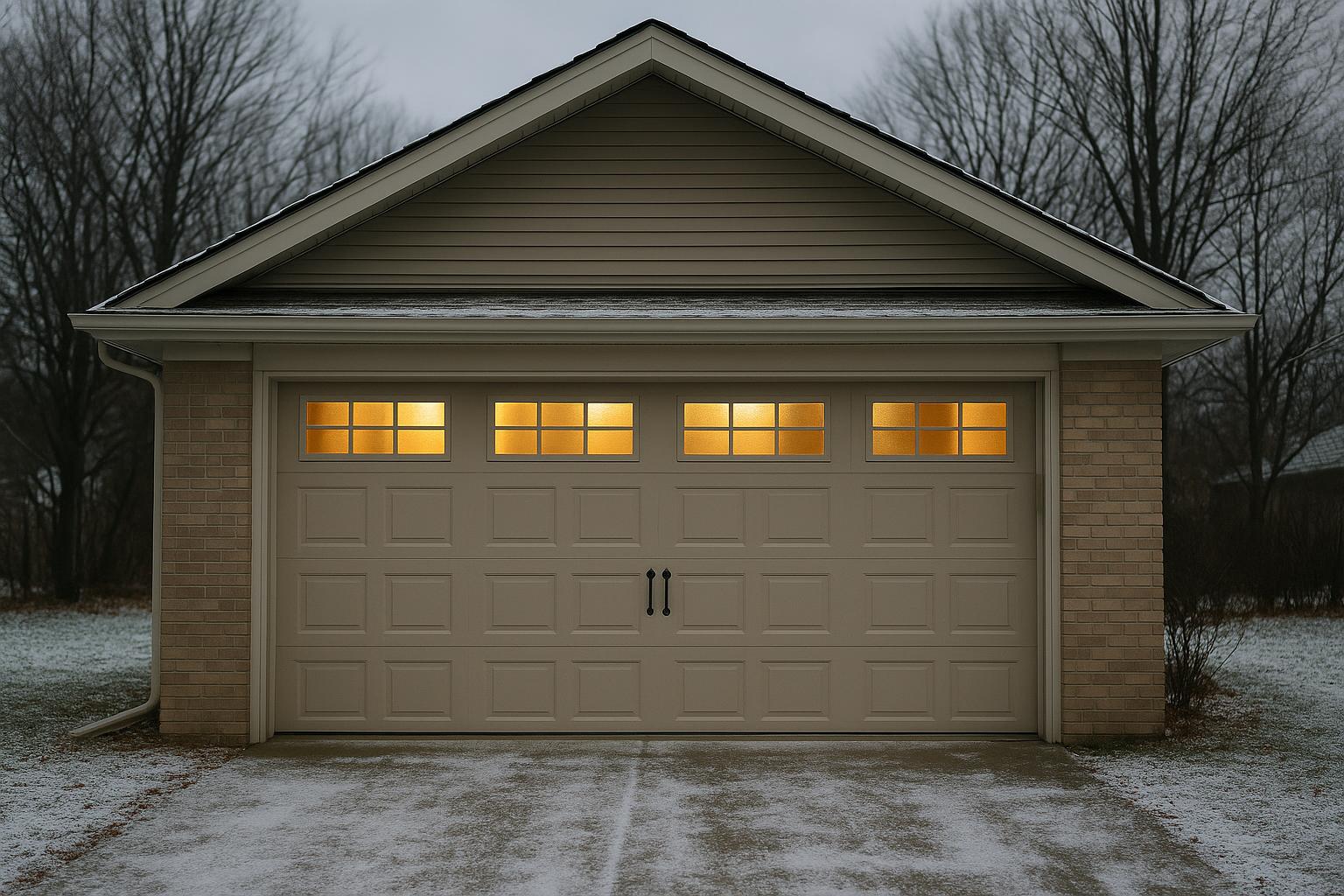
Winter Is Coming — Is Your Garage Door Ready?
If you've lived in Lake Orion for even one winter, you know how brutal Michigan weather can be. Temperatures plunge below zero, ice builds up overnight, and snow seems to arrive before you've even put away the Halloween decorations. While most homeowners think about winterizing their furnace, pipes, and windows, there's one critical part of the home that often gets overlooked: the garage door.
Your garage door is the largest moving part of your home and one of the most exposed to the elements. When it fails in the middle of January, it's more than an inconvenience — it's a safety issue and an energy drain. The good news is that a little preparation in the fall can save you from emergency repairs and sky-high heating bills all winter long.
Here's a comprehensive guide to getting your garage door winter-ready.
1. Inspect and Replace the Weatherstripping
The rubber weatherstripping along the bottom and sides of your garage door is your first line of defense against cold air, snow, ice, and moisture. Over time, this seal cracks, hardens, and pulls away — especially after enduring Michigan's freeze-thaw cycles.
Take a close look at the weatherstripping around the entire perimeter of your door. If you see visible gaps, cracks, or sections that have become stiff and brittle, it's time for a replacement. Fresh weatherstripping keeps cold drafts out, helps maintain a more stable temperature inside your garage, and prevents water and pests from sneaking in.
This is a relatively inexpensive fix that makes a noticeable difference in comfort and energy efficiency — especially if your garage is attached to your home.
2. Lubricate All Moving Parts
Cold weather causes metal components to contract, which increases friction and makes your garage door work harder to open and close. Before the first freeze hits Lake Orion, apply a silicone-based or lithium-based lubricant to all the moving parts of your garage door system:
- Hinges — where the door panels connect
- Rollers — especially metal rollers (nylon rollers need less lubrication but still benefit from it)
- Springs — both torsion and extension springs
- Tracks — a light application to keep things gliding smoothly
- Lock mechanisms — to prevent them from freezing up
Avoid using WD-40 as your primary lubricant. While it's great for loosening stuck parts, it's not a long-term lubricant and can actually attract dirt and grime over time. Stick with products specifically designed for garage door maintenance.
3. Test the Balance of Your Door
An unbalanced garage door puts extra strain on the opener and springs, and that strain only gets worse in cold weather. To test the balance, disconnect the automatic opener by pulling the release handle, then manually lift the door about halfway. If it stays in place, the balance is good. If it slides up or crashes down, the springs likely need adjustment.
Important: Do not attempt to adjust garage door springs yourself. Torsion springs are under extreme tension and can cause serious injury. If your door is out of balance, call a professional to handle the adjustment safely.
4. Check the Garage Door Opener
Your garage door opener works harder during the winter months. Cold temperatures can affect the motor, and power outages from ice storms can leave you locked out — or in. Here's what to check:
- Battery backup: If your opener has a battery backup, test it and replace the battery if it's more than two years old.
- Force settings: Cold weather can cause the door to stick slightly. If your opener is struggling to fully open or close the door, the force settings may need a minor adjustment.
- Remote batteries: Cold drains batteries faster. Replace the batteries in your remotes and keypad before winter so you're not stranded in the driveway during a snowstorm.
5. Insulate Your Garage Door
If your garage door isn't insulated, your garage essentially becomes an icebox in the winter. This matters more than you might think, especially if your garage is attached to your home. An uninsulated garage door allows cold air to seep into adjacent rooms, forcing your furnace to work overtime.
Garage door insulation kits are available for DIY installation, but for the best results and a proper fit, professional installation is the way to go. If your current door is old and uninsulated, it may be worth considering a replacement with a modern insulated garage door, which can significantly improve your home's energy efficiency and even boost its resale value.
6. Clear the Tracks and Remove Debris
Before winter sets in, take a few minutes to clean out the tracks on both sides of your garage door. Leaves, dirt, cobwebs, and small debris can accumulate throughout the fall and cause the door to operate unevenly or get stuck. Wipe the tracks down with a clean cloth and check for any dents or damage that could interfere with smooth operation.
While you're at it, make sure the area around the base of the door is clear. Piles of leaves or debris can trap moisture against the weatherstripping and the bottom of the door, leading to rot, rust, or ice buildup.
7. Address Small Problems Before They Become Big Ones
That minor squeak, the slight hesitation when the door opens, or the small gap you noticed along one side — these are all issues that tend to get dramatically worse in cold weather. Metal contracts, lubricant thickens, and components that were barely hanging on in October can fail completely in December.
A pre-winter maintenance inspection is one of the smartest investments a homeowner can make. A trained technician can spot worn cables, weakening springs, misaligned tracks, and other issues that are much easier and cheaper to fix before they turn into emergency calls on a freezing Saturday night.
8. Prevent Your Garage Door from Freezing to the Ground
This is a common problem for homeowners throughout Orion Township, Auburn Hills, and the surrounding areas. When temperatures drop and moisture is present, the bottom of your garage door can literally freeze to the ground. If you try to open it with the automatic opener while it's frozen, you risk damaging the door, the opener, or both.
To prevent this:
- Keep the area where the door meets the ground clear of standing water and snow.
- Apply a thin layer of silicone spray or cooking oil along the bottom seal to reduce ice adhesion.
- If the door does freeze, use a heat gun or pour warm (not boiling) water along the base to gently free it before attempting to open it.
Don't Wait for the First Freeze
The best time to winterize your garage door is before you actually need it to perform in harsh conditions. A little preventive care now can save you from the frustration, cost, and safety risks of a garage door failure in the dead of winter.
At Lake Orion Overhead Garage Door, we help homeowners across Lake Orion, Oxford, Rochester Hills, and Clarkston prepare their garage doors for whatever Michigan's winter throws at them. Whether you need a full maintenance tune-up, weatherstripping replacement, insulation, or a spring adjustment, our team is here to help.
Schedule your pre-winter garage door inspection today and head into the cold months with one less thing to worry about.